

Sensory impairment
Small adjustments make the difference. Carers are briefed on how the person prefers to communicate and how their home is arranged.

Is this you?
Support for people living with sight or hearing loss.
People with sight loss
The home is arranged exactly as it needs to be, and carers have to work with that, not around it.
People with hearing loss
Communication has to happen in your preferred format from the first visit, not the third.
People with dual sensory loss
Small adjustments make the difference between support that works and support that does not.
What you get
- Communication in the person's preferred format
- Support to navigate safely at home
- Help with correspondence and appointments
- Carers briefed on individual needs
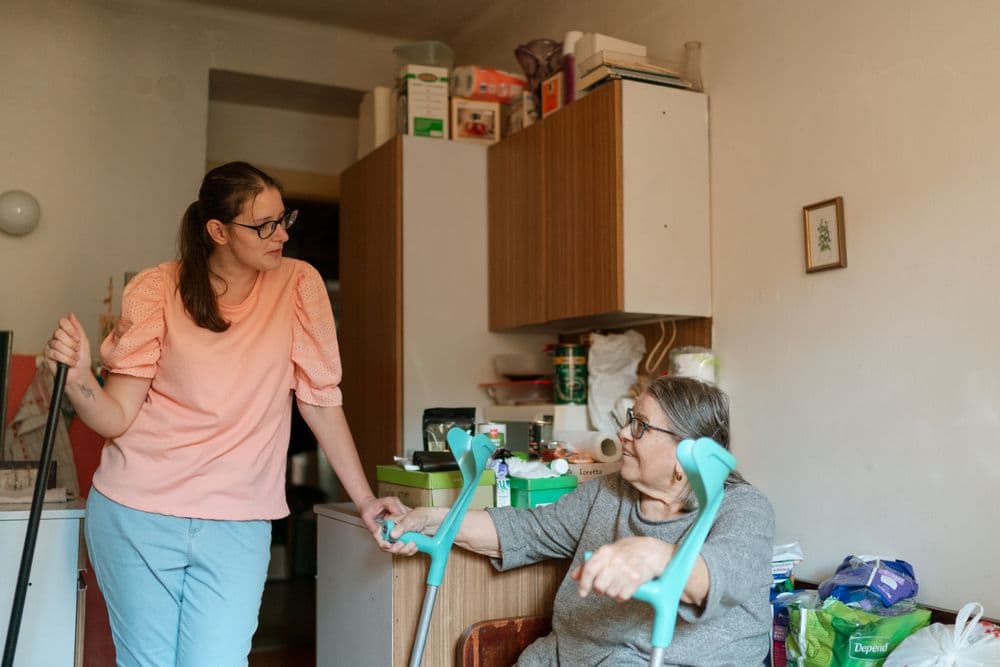
Small adjustments are the whole job
The home is often already arranged exactly as it needs to be. Carers who move the chair, stack the post in a new place, or shout from the hallway make the visit worse. We brief on how the person prefers to communicate and how the house works, and we treat that briefing as part of the plan, not a nice extra.
- Communication in the person's preferred format from visit one
- Support to navigate safely at home without rearranging it
- Help with correspondence, bills and appointments
- Carers briefed on lighting, loop systems, guide dogs and routines
Getting out without the visit becoming a performance
Appointments, shops and social contact often drop first when sensory impairment increases. Visits can include accompaniment, with time and transport in the booking. The carer is there to make the trip possible, not to take it over.
- Booked time for appointments, not a squeezed extra
- Consistency so the person is not re-explaining their needs
- Coordination with rehab workers and existing specialists
- A plan that names what the person wants to keep doing
Four steps to care starting
- Step 01
Enquiry
Tell us what is happening. One conversation, no obligation.
- Step 02
Assessment
We assess needs, preferences, communication, consent, capacity and risks at home.
- Step 03
Care plan
A written plan setting out agreed needs, preferences, outcomes, risks, consent, visit arrangements and review dates.
- Step 04
Care starts
Support begins once all required arrangements, checks, consent, registration and commissioning requirements are in place, and the plan is reviewed as needs change.
Related services
Pages that usually sit next to this one — so you are not hunting the menu.
- Personal careHands-on support with washing, dressing and the parts of a day that have become difficult.Read more
- Domiciliary and home careScheduled visits arranged around the household, from short daily calls upwards.Read more
- Companionship and wellbeing visitsRegular company, conversation and support to stay connected.Read more
- Physical disabilityPractical support that works around the person's own way of doing things.Read more
Arranging care
Funding, coverage and how to start.